Patch the Panel
- Steel
- Firm around the rust
- Rust
- Surface rust or small pinholes
- Laps
- Sealant worn, metal solid
- Fix
- Clean, prime, seal, or metal patch
- Fasteners
- Stitch screws through the patch
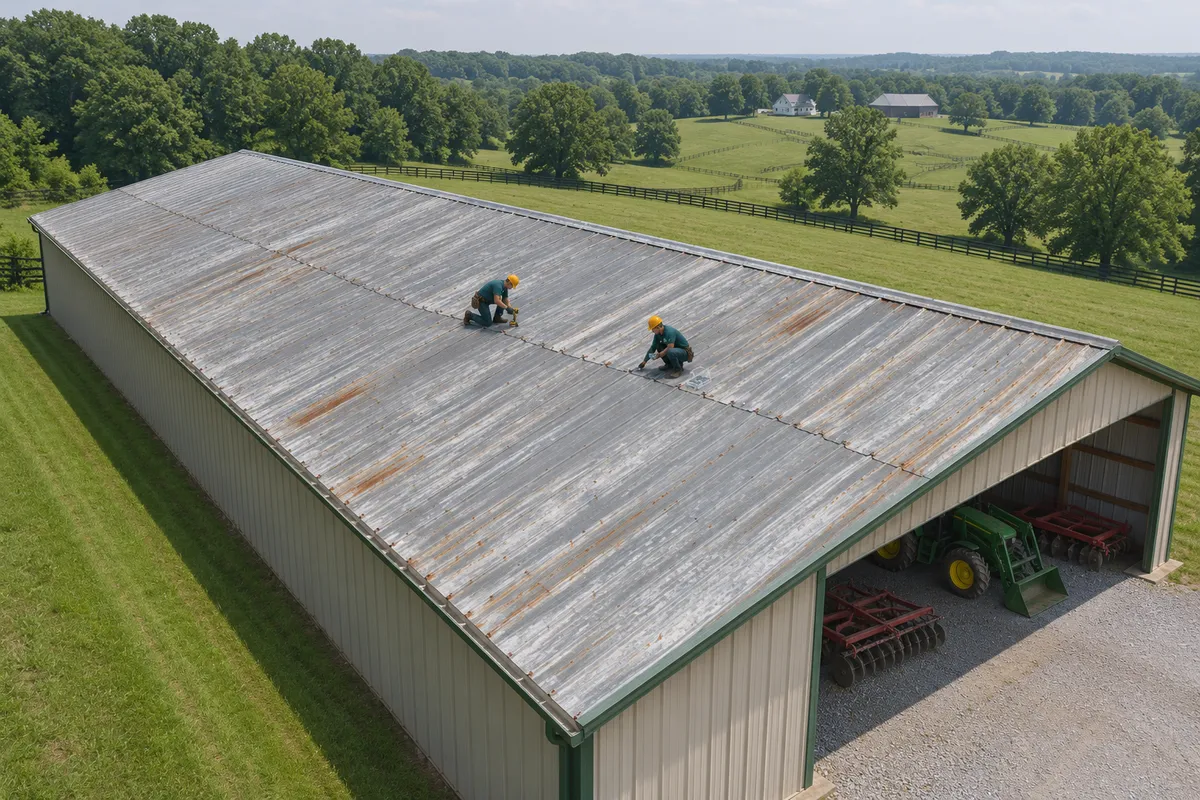
As a Nicholasville commercial metal roof repair contractor, we replace failed screws, seal end laps, fix rusted panels, and repair gutters on steel roofs.
Patch Or Replace
A Nicholasville commercial metal roof repair contractor decides that by probing the rust. Firm steel around the spot gets patched, and holes or flex call for new metal.
Metal Roof Conditions
Metal roofs move with every temperature swing, and that movement works on the screws, laps, and trim. These are the usual failures.
Heat cycling that backs screws out a little more each season.
Pull them and drive new screws with fresh washers into the purlin, snug without crushing the washer.
End laps holding water across the joint after the old sealant thinned.
Clean the lap, add stitch screws to pull it tight, and cover it with butyl tape or reinforced sealant.
Water lingering at cut edges and the eave line until rust starts.
Probe with a screwdriver to see how far it goes, then prime and seal or replace that panel section.
Hangers pulled loose, often under a load of leaves or ice.
Rehang the gutter, reseal seams and end caps, and clear it before freezing weather.
Eave closures that shrank or fell out, letting wind push water upslope.
Install new closures and refasten any loose eave trim.
Repair Options
Most metal roof repair is fastener and lap work. Panel replacement comes in only where the steel itself has failed.
Spot fixes leave the next loose screw a foot away. Replacing fasteners along the whole row, oversized where holes have widened, lasts longer.
Lap screws, then butyl tape or fabric-reinforced sealant across the joint. Low-slope metal roofs get this first because their laps hold water longer.
Surface rust gets cleaned, primed, and sealed; pinholes get a metal patch set in sealant; rust-through at laps or eaves gets a new section.
Ridge cap fasteners, trim joints, pipe boots, and cracked translucent panels round out the list on most steel buildings.
Why Repair The Metal Roof
Steel roofs give plenty of warning before they fail. Acting on the small signs keeps the panels themselves in service.
New screws in the right size seal the hole before it widens and strips, which keeps the panel attachment strong at each purlin.
Catching rust at the laps and eave while the steel is still firm means a primer and seal job instead of new metal.
Rehung gutters and fresh eave closures let melting ice drain off the edge instead of backing up under the panel ends.
Stopping lap leaks keeps water off the blanket insulation under the panels, where it can sit unseen and feed condensation rust.
Loose fasteners only get looser. Ask for an estimate and we will check every screw row on the roof.
Metal Roof Process
Metal roof repairs follow the water from the drip inside to the fastener, lap, or trim piece above it.
The inspector walks the screw rows, end laps, ridge cap, and gutters, probing rusty laps and eaves with a screwdriver to find firm steel.
Inside, drips on metal buildings often run along a purlin or rafter first, so the marked drip points get matched to the roof above.
Screws come out and new ones go in with fresh washers, laps get stitch screws and butyl tape, and rusted sections get primed, patched, or replaced.
Gutters and downspouts get cleared and rehung so ice in a Kentucky winter has somewhere to drain besides back under the eave.
Related Repairs
Steel buildings often need one of these alongside the metal roof work.
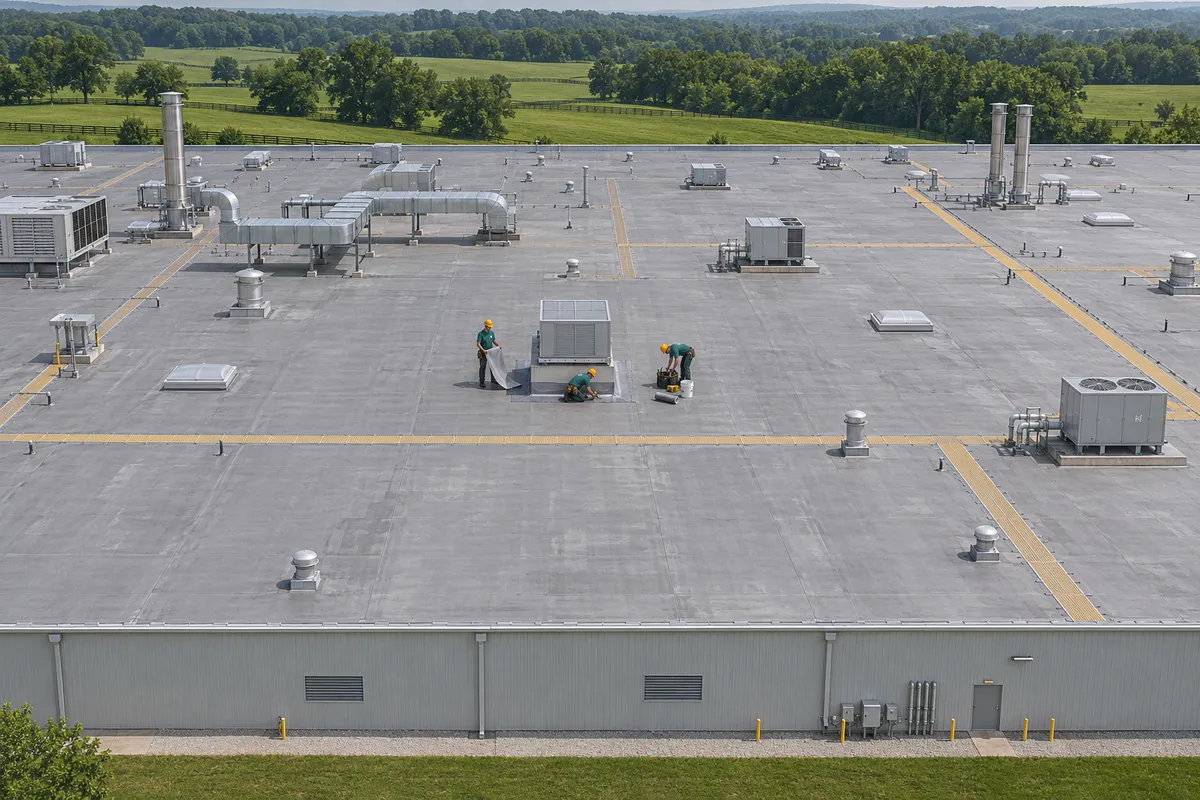
Plant buildings with metal roofs over the production floor get the same fastener and lap work, planned around shifts and hot work rules.
Industrial roof repair →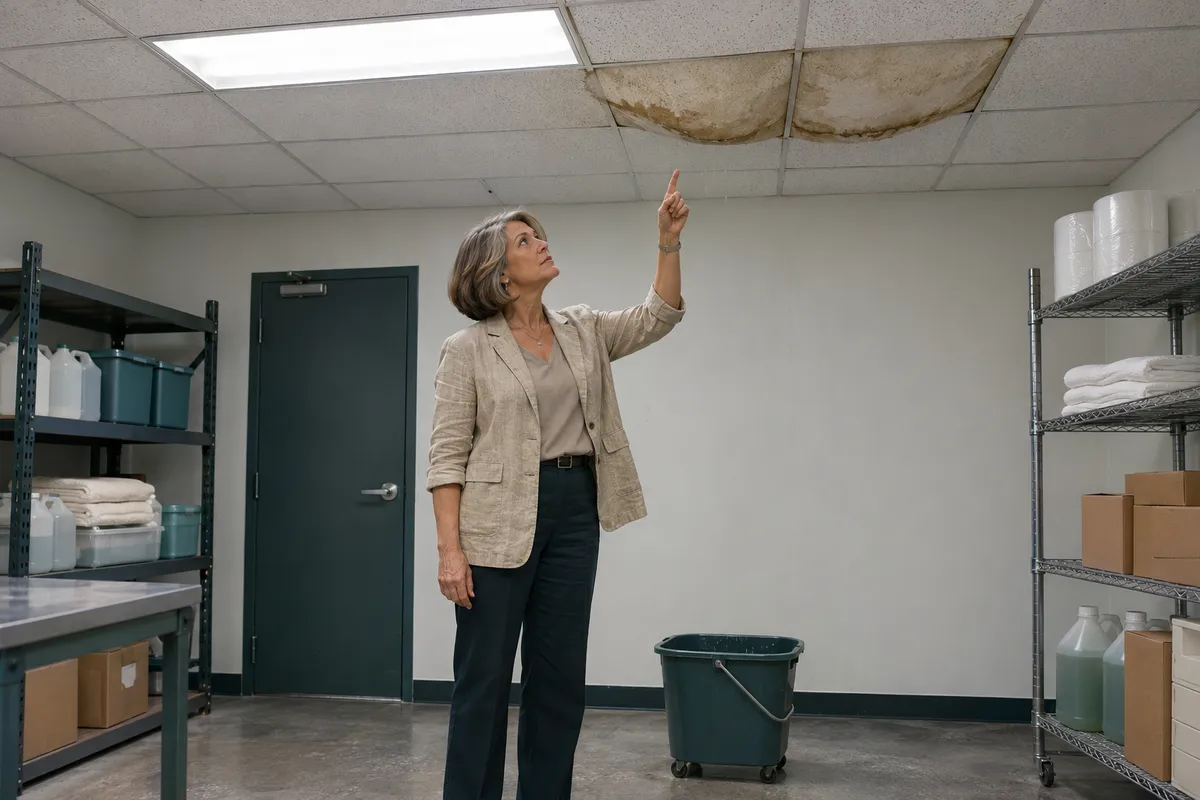
Drips that keep coming back after the screws are replaced may trace to a skylight panel or curb, which leak repair tracks down.
Roof leak repair →Metal Roof Questions
Backed-out and stripped fasteners come out and new ones go in with fresh washers, with an oversized screw where the hole has widened. Each screw goes into the purlin, tight enough to compress the washer without crushing it.
Sealant smeared over a loose screw lasts only a short while. Replacing fasteners along full rows outlasts spot fixes.
Patching works while the steel around the rust stays firm. Surface rust gets cleaned, primed, and sealed, and small pinholes get a metal patch with sealant and fasteners.
Rust-through at laps or eaves calls for a new panel section, and widespread perforation means panel replacement or a re-roof. Probing the end laps, cut edges, and eave line with a screwdriver shows how far the damage reaches.
Old sealant and dirt get cleaned out of the lap, lap screws pull the panels tight, and butyl tape or fabric-reinforced sealant goes across the joint. The panel ribs get extra attention, since lap seals often thin out there.
Low-slope metal roofs hold water at the laps longer, so those laps get repaired first.
Metal work centers on fasteners, laps, and trim, while membrane work centers on seams, flashing, and punctures. Heat loosens screws on metal and shrinks membrane at the edges, and each roof needs its own tools and materials.
A building with metal over the office and membrane over the shop needs both kinds of repair on one visit.
Clogged or undersized gutters, loose eave trim, and missing closures that let wind push rain under the panel ends. Opened gutter seams, pulled hangers, and rust where water backs up are common too.
In Kentucky winters, full gutters freeze and push water back into the eave. Clearing them before freezing weather prevents much of that damage.
Tell us whether it is a screw-down or standing seam roof and where the drips land. We will walk the rows and laps and price the repair.
Leave a name and number and we will call you about the leak or repair.
Or call +1 (270) 260-2465