Where do most commercial roof leaks start?
At joints and openings. Seams, flashing, penetrations, and drains let in most of the water on a commercial roof, while the open field rarely fails first.
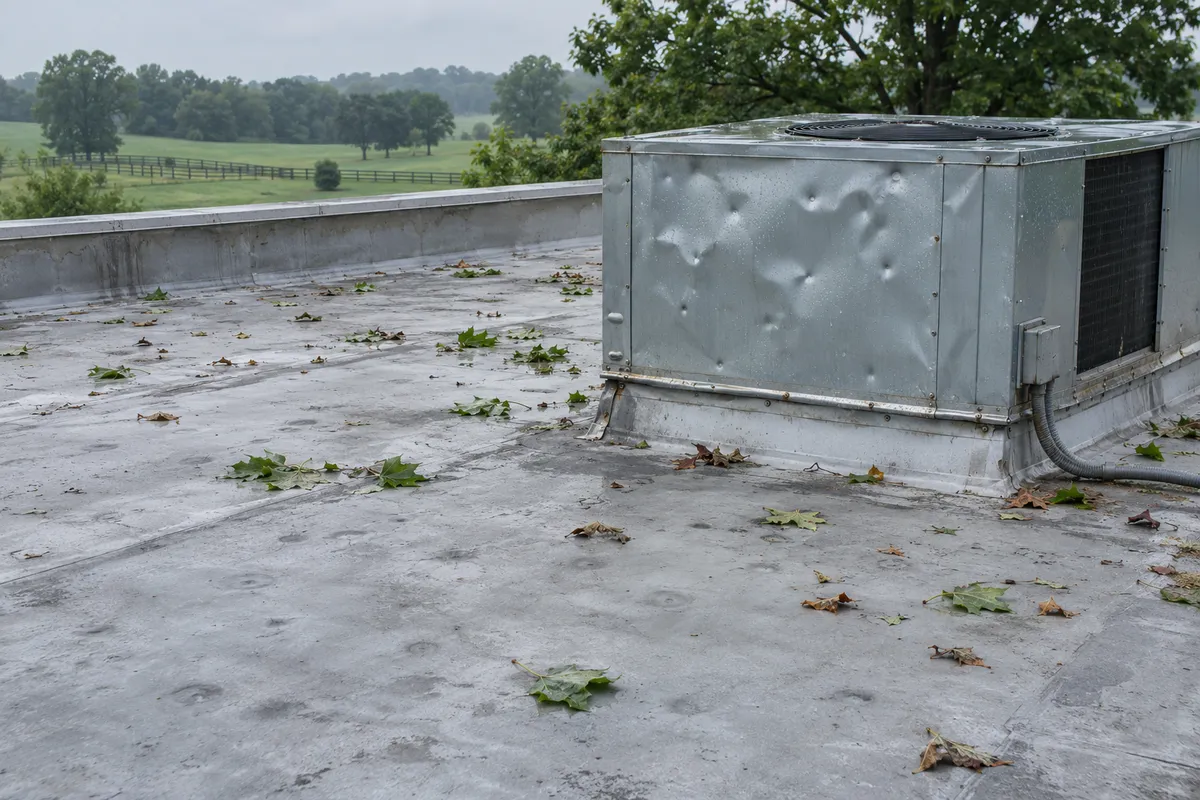
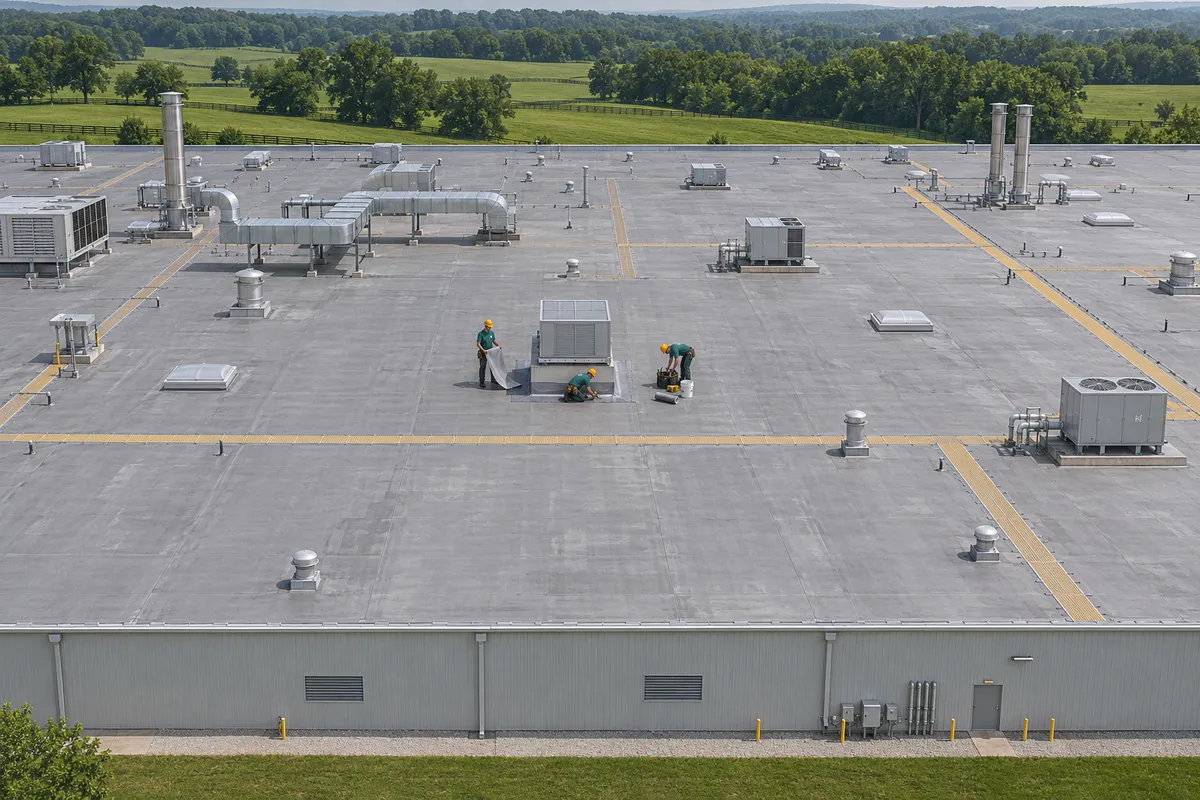
The usual spot changes with the roof: seam edges and curb corners on TPO, lifted tape on EPDM, open laps on modified bitumen, and screws or end laps on metal. Clogged drains make every one of them worse.
How many repairs are too many before restoring or replacing?
Repairs stop paying off when the same kind of failure keeps showing up in new places each season. Patches covering a large share of the field, spreading wet insulation, or rust-through at many laps are the signs.
Lay a year of repair invoices next to the cost of a restoration or replacement scope to see where your money goes further.
What does a commercial roof leak inspection include?
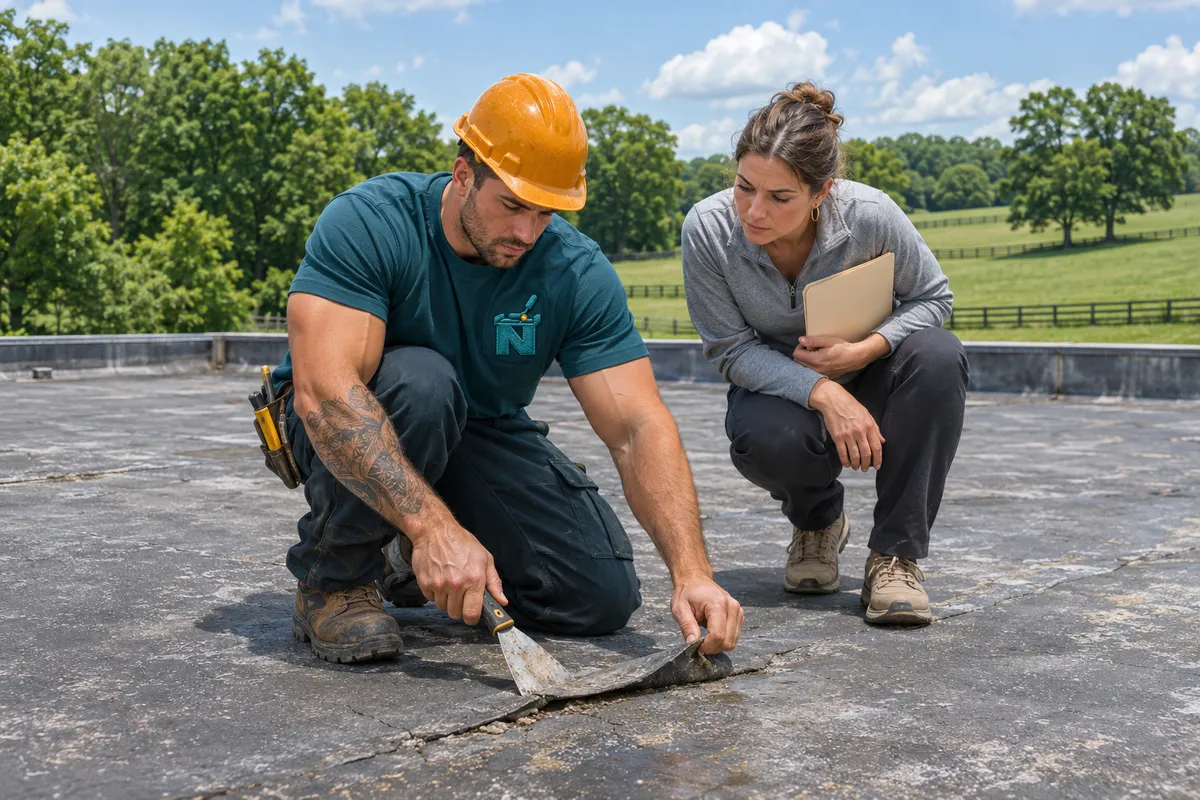
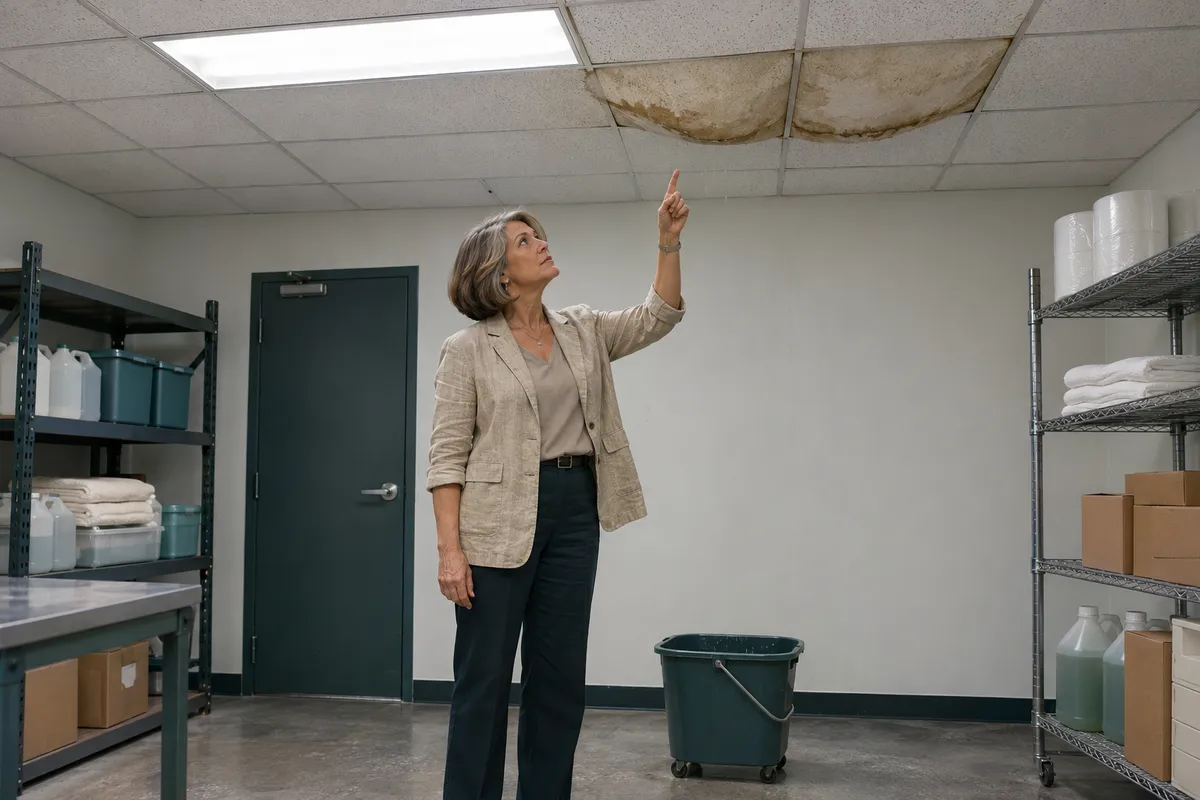
It starts inside at the stains and active drips, then moves up to the seams, laps, and old patches above them, the flashing at curbs, walls, and skylights, and the drains, scuppers, and gutters.
Soft insulation gets moisture readings or a core cut. You get photos and a marked roof plan, and any open leak found gets temporary protection.
Which service fits a leak we cannot place?
Roof leak repair. When a drip shows up with no clear opening above it, the job starts with interior mapping and a visual check, then water testing or a moisture survey to find the source before anything is fixed.
Once the source turns up, the repair itself falls under flat, metal, or industrial roof work, and it goes on the same marked roof plan.
When does a roof need a moisture survey instead of a visual check?
When the stains inside do not line up with any opening you can see on the roof, or when the membrane feels soft underfoot. A survey finds wet insulation hiding under a surface that looks fine, and a core cut confirms it at the spot.
Do you repair both membrane and metal roofs on one building?
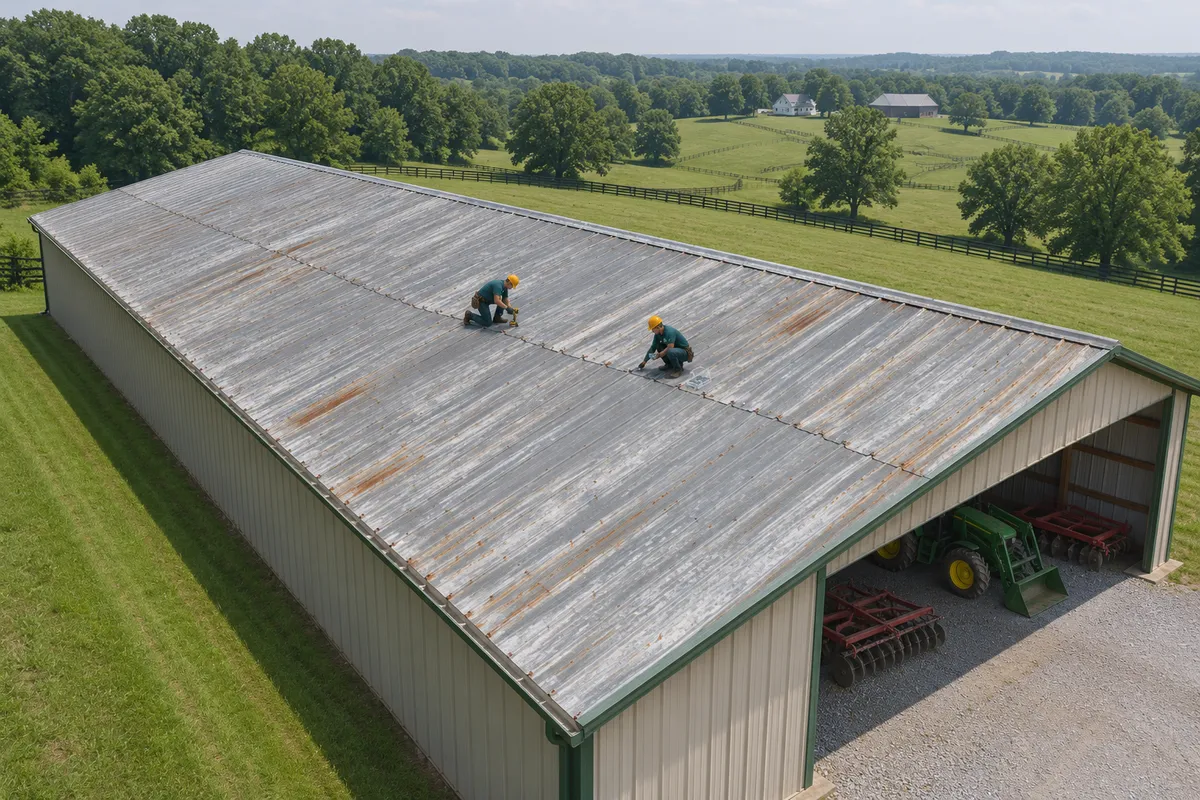
Yes. Many buildings around Nicholasville have a metal roof over the shop and a membrane roof over the office, or the reverse. One inspection covers both, and each roof gets the repair method that matches its material.
Both roofs go on one marked roof plan, so the repairs on the office and the shop are tracked in the same record.