Repair Fits
- Seams
- A few open laps or split corners
- Insulation
- Dry on core cuts
- Membrane
- Still takes a test weld or tape
- Ponding
- Small areas near drains
- Repair
- Weld, tape, or cap strip at each spot
As a Nicholasville flat roof repair contractor, we reweld, retape, and patch TPO, PVC, EPDM, modified bitumen, and built-up roofs on commercial buildings.
Repair Or Replace
A Nicholasville flat roof repair contractor answers that by looking under the membrane. Dry insulation and holding seams mean repair, and saturated boards mean replacement.
Flat Roof Conditions
Low-slope roofs leak at seams, flashing, and low spots long before the field wears out. These five show up most on commercial flat roofs.
Welds that never fully fused, or old sheet that has stiffened around the lap.
Clean the lap, run a test weld, then reweld or weld a cover strip and probe the full length.
Trapped moisture or poor adhesion under the cap sheet.
Slice open blisters that have split or sit in foot traffic, let them dry, and patch with matching material.
Clogged strainers and scuppers, or a sag with no slope to a drain.
Clear drain bodies and leaders, mark the pond after rain, and cut tapered insulation into the low spot.
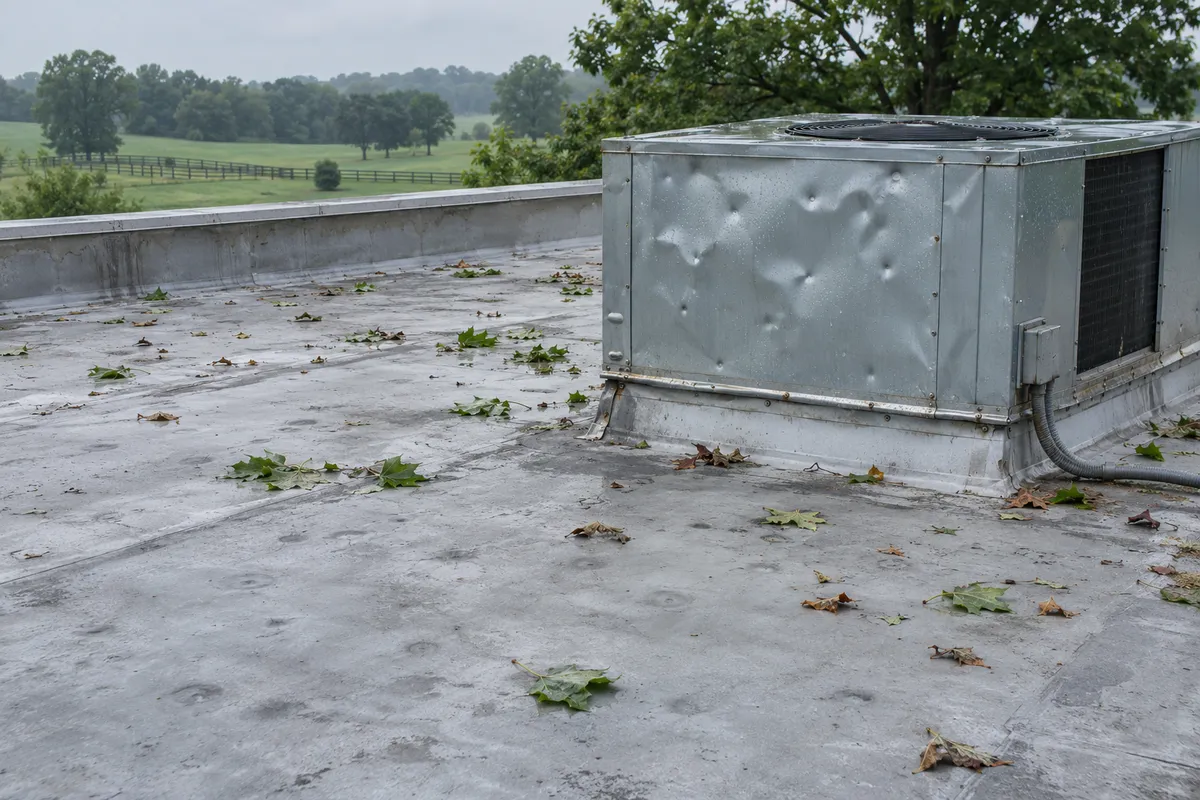
Dropped screws, panels, and tools from HVAC service.
Cut out wet insulation, then weld a rounded-corner TPO patch or roll an EPDM patch with factory tape.
Open coping cap joints letting water into the wall cavity above the flashing.
Reseal splice plates under the coping, reattach base flashing, and redo the counterflashing sealant.
Repair Options
Each membrane takes its own repair. Matching the method to the sheet is what keeps a patch from becoming the next leak.
Hot-air welding after the lap is cleaned. PVC repairs get probed along the whole repaired length before anyone leaves the roof.
Old seam tape comes off, the rubber gets a primer-compatible cleaner, and new tape or a cover strip is rolled down with a pressure roller.
A strip of new cap sheet is heated or adhered over open laps, and cracked base flashing gets rebuilt with matching plies.
Where clearing drains still leaves standing water, tapered insulation or a cricket gets cut in, and an added drain or scupper goes where water has no exit.
Why Repair The Flat Roof
A repaired seam or drain protects more than the spot itself, since the water it stops would have spread under the membrane.
Long-standing ponds add weight to the deck and wear the membrane faster. Clearing the drain and adding slope takes that load off.
A rewelded or retaped lap closes the opening that let water travel sideways under the sheet toward the next bay.
Fixing coping joints and base flashing stops water from running down inside a parapet and showing up on interior walls.
Core cuts and a probe of each repair show how much of the roof is still dry, which helps you plan the budget for later years.
Standing water past two days is the sign to act. We clear the drains and mark the pond outline so the low spot can be fixed.
Flat Roof Process
Flat roof repairs need dry, clean laps, so the steps run around the weather as much as around the roof.
Every seam, curb, drain, and parapet gets a look, and the inspector probes laps and runs a test weld on older TPO before choosing the repair.
Leaders and downspouts at ground level get checked for blockages, since a plugged leader backs water onto the roof like a clogged strainer.
Wet insulation comes out, then each seam, puncture, and blister gets the method that matches its membrane on a cleaned, dry surface.
After the next rain, check the marked pond outlines. Water that clears within two days means the drain and slope fix is working.
Related Repairs
Flat roof problems often overlap with these two services.
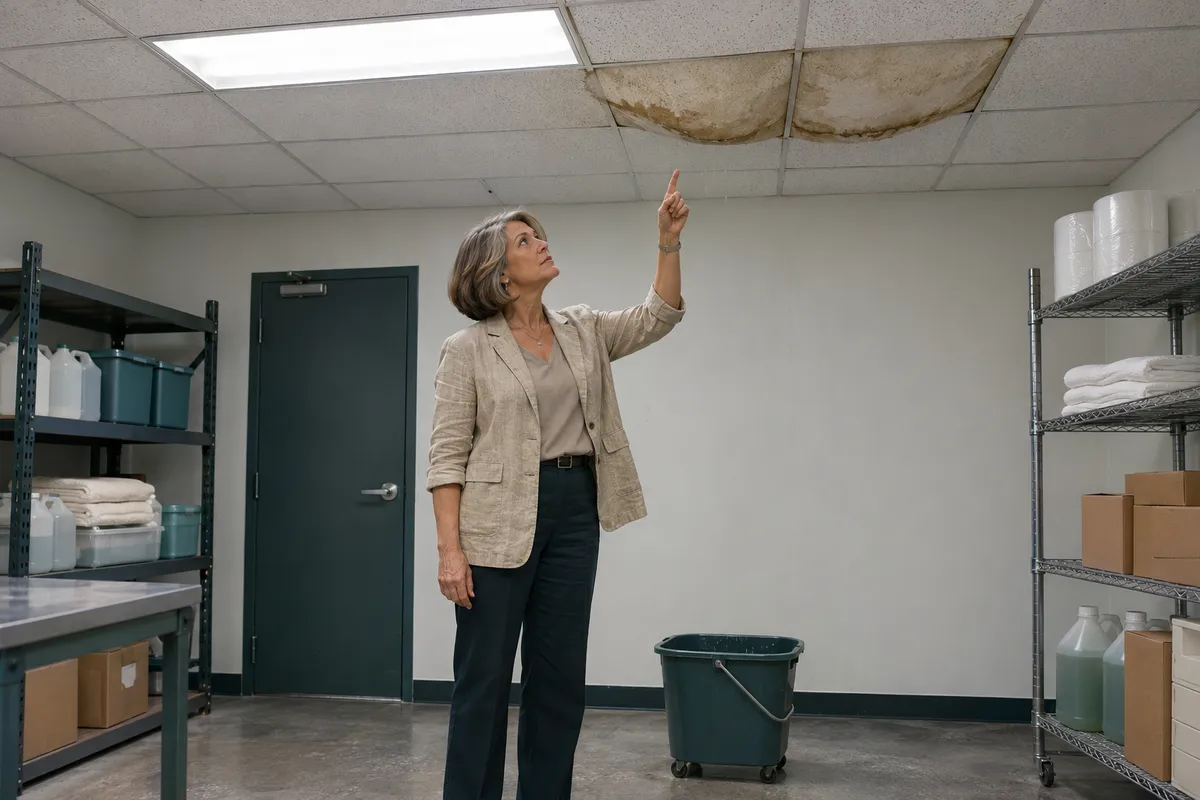
When a drip shows up far from any visible seam, leak repair traces the water along deck flutes and insulation joints first.
Roof leak repair →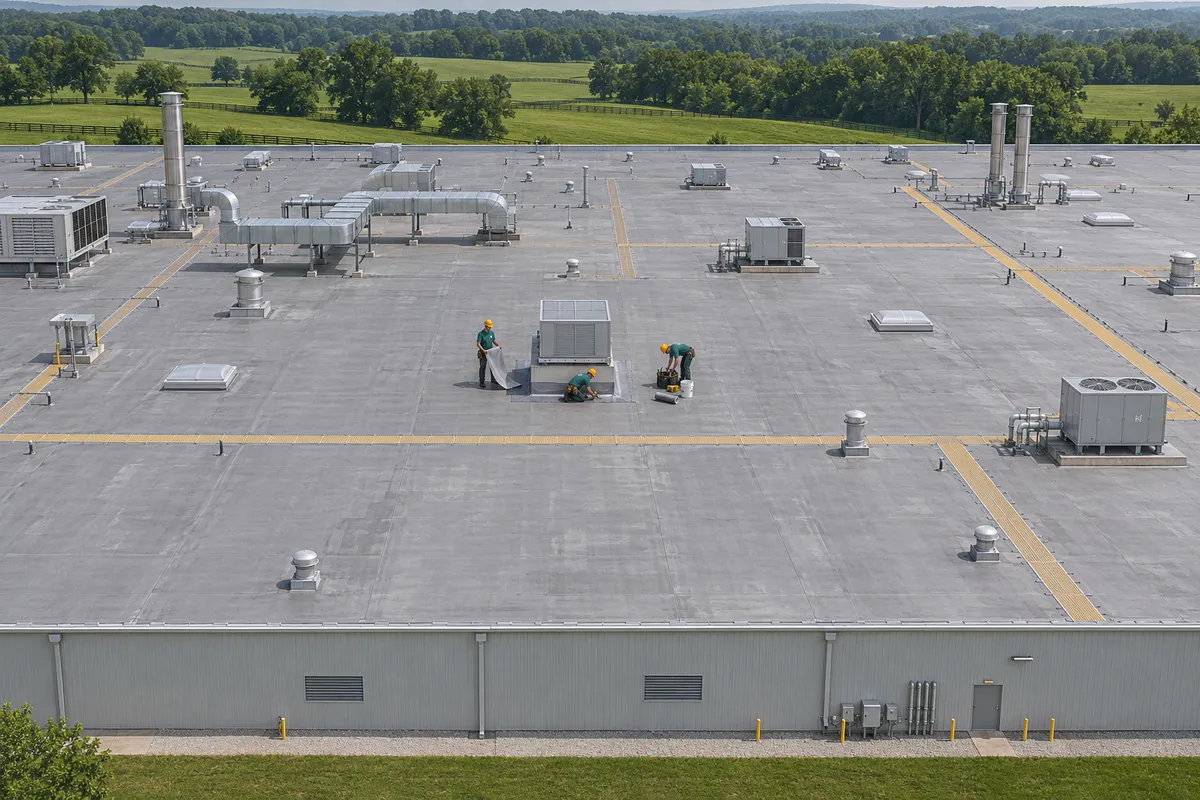
Plant roofs with exhaust fans and heavy service traffic need flat roof repair planned around production and hot work rules.
Industrial roof repair →Flat Roof Questions
The method follows the membrane. TPO and PVC get heat welded, EPDM gets primer and seam tape, and modified bitumen gets a new cap sheet strip heated or adhered over the lap.
Older TPO sometimes refuses a new weld, which is why a test weld comes first. Long runs of failing seams point toward restoration or replacement.
Yes. On built-up and modified bitumen roofs, a blister gets sliced open, dried out, and patched with matching material. Small, firm blisters that stay closed are often left in place and watched.
Repair makes sense once a blister cracks, sits in a walking path, holds water, or merges with others into a wide bubble. A cluster of them points to trapped moisture under the cap sheet.
Clear strainers, drain bodies, scuppers, downspouts, and leaders first. After the next rain, outline the standing water and add tapered insulation or a cricket in that low spot.
When water has no exit at all, an added drain or scupper goes in. Ponds that sit for more than two days wear the membrane faster and load the deck.
The membrane around the hole gets cleaned, and a patch with rounded corners is cut to reach past the damage on every side. TPO patches get hot-air welded and probed; EPDM patches get primer, factory tape, and a pressure roller.
Wet insulation under the puncture gets cut out and replaced first, so the patch keeps water out of the roof instead of sealing it in.
Water gets in where the membrane turns up the wall or through joints in the coping cap along the top. Once inside the parapet, it runs down and appears at the roof edge or on an interior wall.
Parapet wall leak repair covers coping splice plates, loose base flashing, counterflashing and reglet sealant, masonry cracks, and scupper collars. A leak traced to the coping gets fixed at the cap, even when the stain shows at the base.
Tell us the membrane type if you know it and where water shows up inside. We will inspect the seams, drains, and parapets and explain the fix.
Leave a name and number and we will call you about the leak or repair.
Or call +1 (270) 260-2465