Section Repair
- Wet Areas
- Confined to defined zones
- Dividers
- Expansion joints split the roof
- Dry Areas
- Seams still holding
- Drains
- Working in most areas
- Plan
- Worst zones first, spread over time
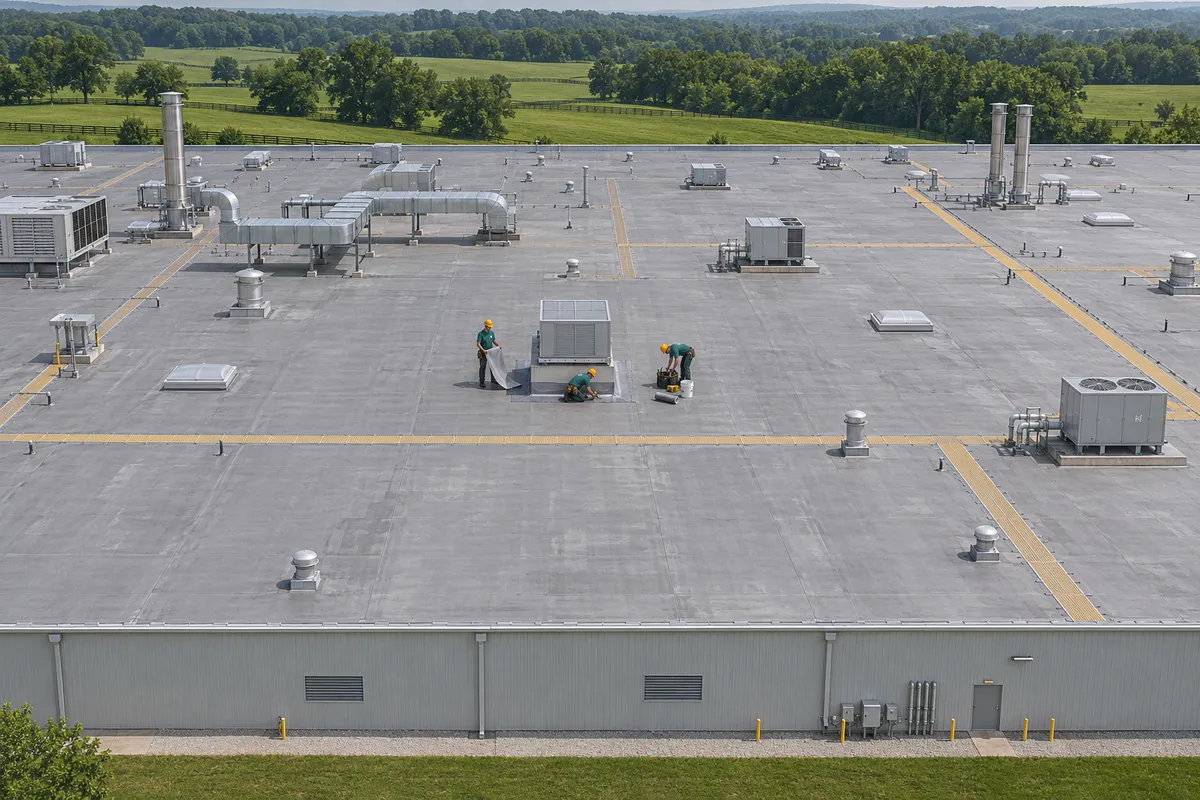
As a Nicholasville industrial roof repair contractor, we repair plant and warehouse roofs from above while production keeps running, following the plant safety rules.
Sections Or Replacement
A Nicholasville industrial roof repair contractor sorts that out with cores and a moisture survey, because confined wet zones can be repaired one section at a time.
Plant Roof Conditions
Plant roofs carry equipment, exhaust, and foot traffic that office roofs never see, and each one leaves its own kind of damage.
Grease from the exhaust softening the membrane around the discharge.
Cut out the damaged area, patch it, and add a grease containment box.
Chemical residue from whatever the vent discharges.
Ask maintenance what each vent puts out, then patch with a resistant membrane.
Heat from the exhaust drying out or melting the membrane.
Install a heat shield and new flashing at the stack.
Daily service traffic crushing insulation, plus dropped screws and panels from HVAC work.
Repair the punctures and lay walkway pads along every path to rooftop equipment.
Technicians stepping on curb flashing to reach the unit.
Rebuild the flashing and add a pad or step where people climb.
Repair Options
Plant repairs mix standard membrane work with protection against whatever the building puts on its own roof.
Damaged membrane comes out around fans and vents, and grease boxes, drip pans, or heat shields go in so the repair lasts.
Pads along the paths to every rooftop unit protect the membrane and show service techs where to walk.
Each zone gets cored and tested, wet insulation is replaced, and seams and flashing are repaired before work moves to the next zone.
A roof plan marked with every repair, leak, and inspection, plus photos and dates, shows patterns such as one curb leaking after every storm.
Why Repair The Plant Roof
Repairing a plant roof in planned sections keeps the production floor dry without shutting the building down for a replacement.
Fixing the worst zones first and the rest later lets the repair budget follow the roof's condition across several years.
Crews work from above with catch tarps under the repair area, so lines below keep moving while the roof gets fixed.
Repairs over food, clean, and electrical rooms move to the top of the list, protecting the spaces where a drip costs the most.
A repair log tied to dates and weather shows which curb or vent fails after each storm, so it gets a permanent fix.
Move what you can, mark the drip, and call. Leaks over food, clean, or electrical rooms go to the top of the list.
Plant Roof Process
Industrial repairs add a coordination step to the usual inspection and repair, because the roof is part of a working plant.
Exhaust fans, process vents, curbs, walkway paths, and drains get checked, and suspect zones get cores or a moisture survey.
Hot work permits for torches and welders, lockout of rooftop units and fans in the work area, and access paths that avoid forklift lanes and docks.
Wet insulation is replaced and seams, flashing, and vent details are repaired in one zone, with catch tarps below, before the crew moves on.
Each repair goes on the roof plan with photos and dates, and the log gets shared with the HVAC contractor and anyone else working up there.
Related Repairs
Plant roofs often combine more than one roof system.
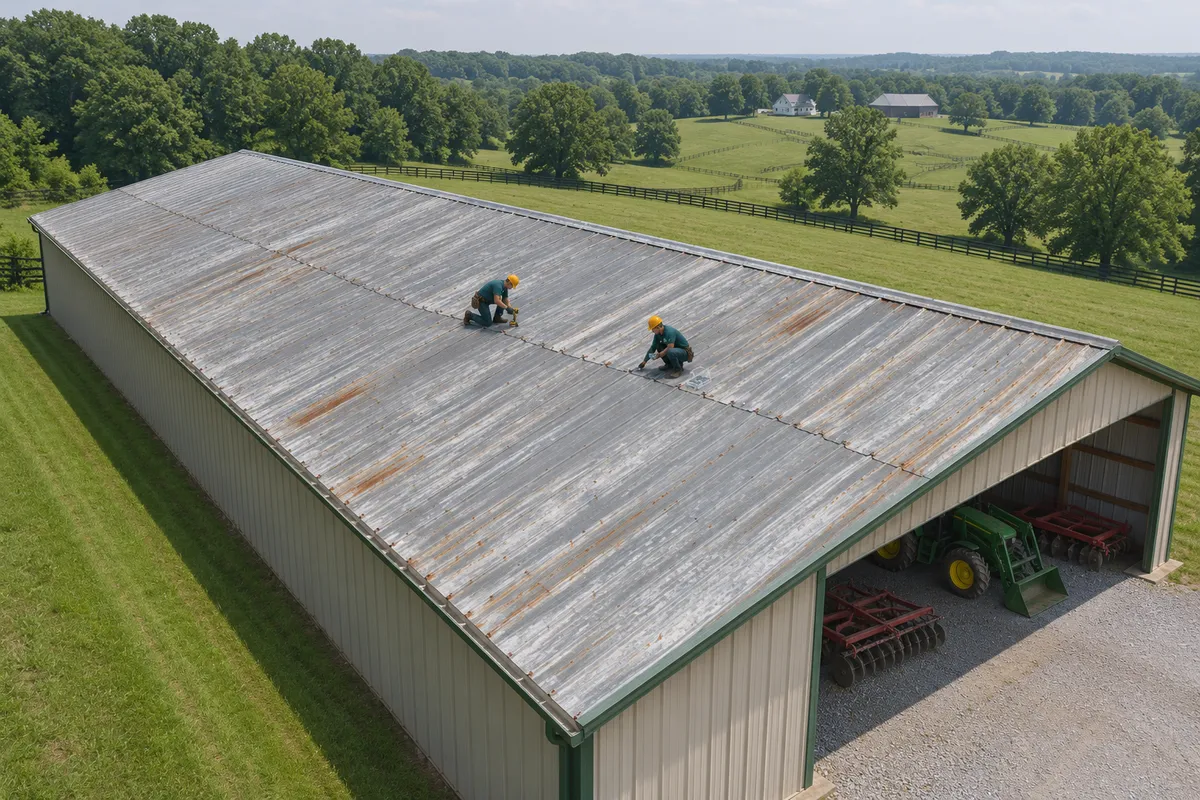
Many plants sit under steel roofs, where fastener rows, end laps, and gutters need the same attention as the membrane areas.
Metal roof repair →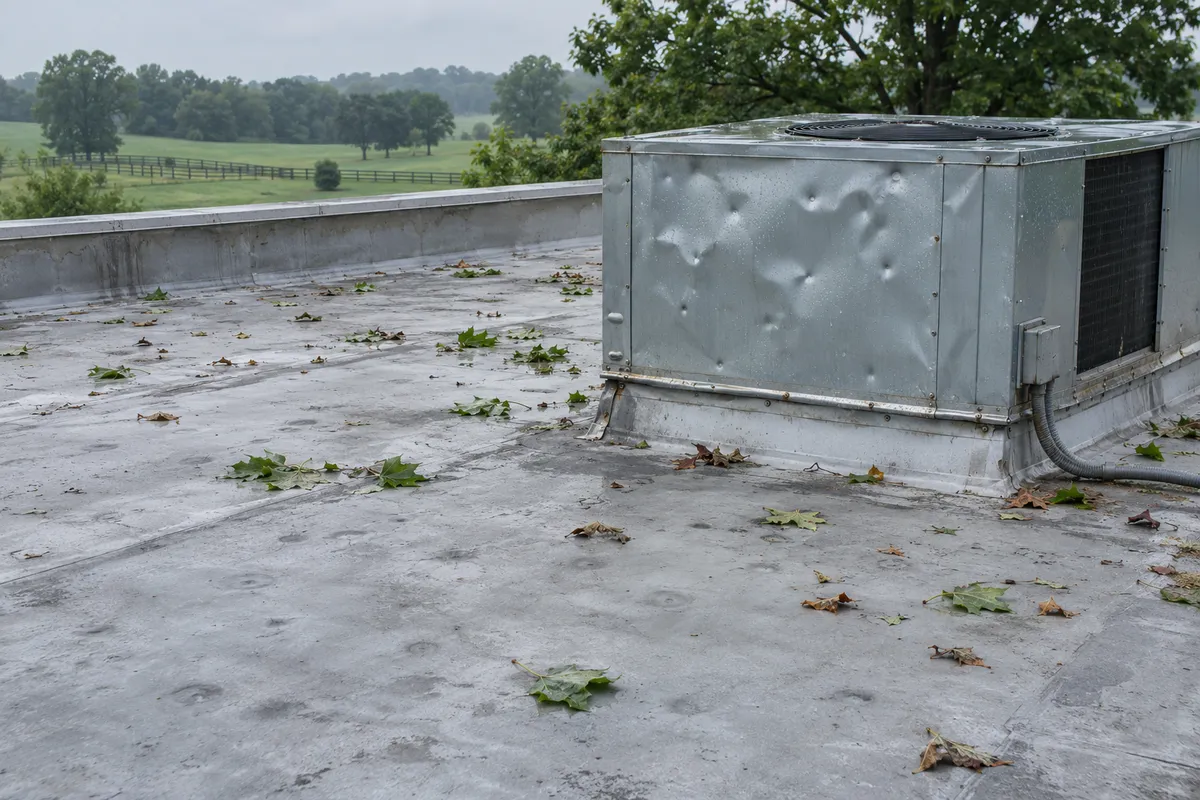
Office and dock areas often have their own low-slope membrane roofs, with seams and drains repaired to match that sheet.
Flat roof repair →Industrial Questions
From above, while production continues. The crew coordinates hot work, rooftop unit shutdowns, and debris control with the plant manager and follows the plant's safety rules on site.
Catch tarps go under the repair area, access avoids forklift lanes and loading docks, and repairs over food, clean, or electrical rooms get done first.
Grease, oils, and chemical residue from the discharge soften, swell, crack, or discolor the membrane near the fan or vent. Hot exhaust can leave brittle or melted spots.
The damaged area gets cut out and patched, then a grease containment box, a resistant membrane, a heat shield, or drip pans go in to match what the vent puts out.
Traffic crushes insulation along walking paths, and dropped tools, screws, and panels from HVAC service puncture the membrane near unit service panels. Dragged equipment scuffs the sheet, and curbs used as steps crack their flashing.
Walkway pads along the paths to rooftop units protect the membrane and show technicians where to walk.
Yes, when most of the insulation is still dry. A moisture survey should show wet areas confined to defined zones, ideally split by expansion joints or area dividers, with seams and drains still working in the dry areas.
Each section is cored and tested, wet insulation replaced, and seams and flashing repaired before moving on, so the worst areas get fixed first.
A roof plan marked with every repair, leak report, and inspection, with photos and dates; a leak log tied to rain, wind, and freezes; and a list of rooftop equipment with the contractor who services each unit.
Share the log with any roofer who works on the building so repeat leaks get traced faster.
Tell us about the plant, the roof units, and where water reaches the floor. We will plan the repair around your shifts.
Leave a name and number and we will call you about the leak or repair.
Or call +1 (270) 260-2465